
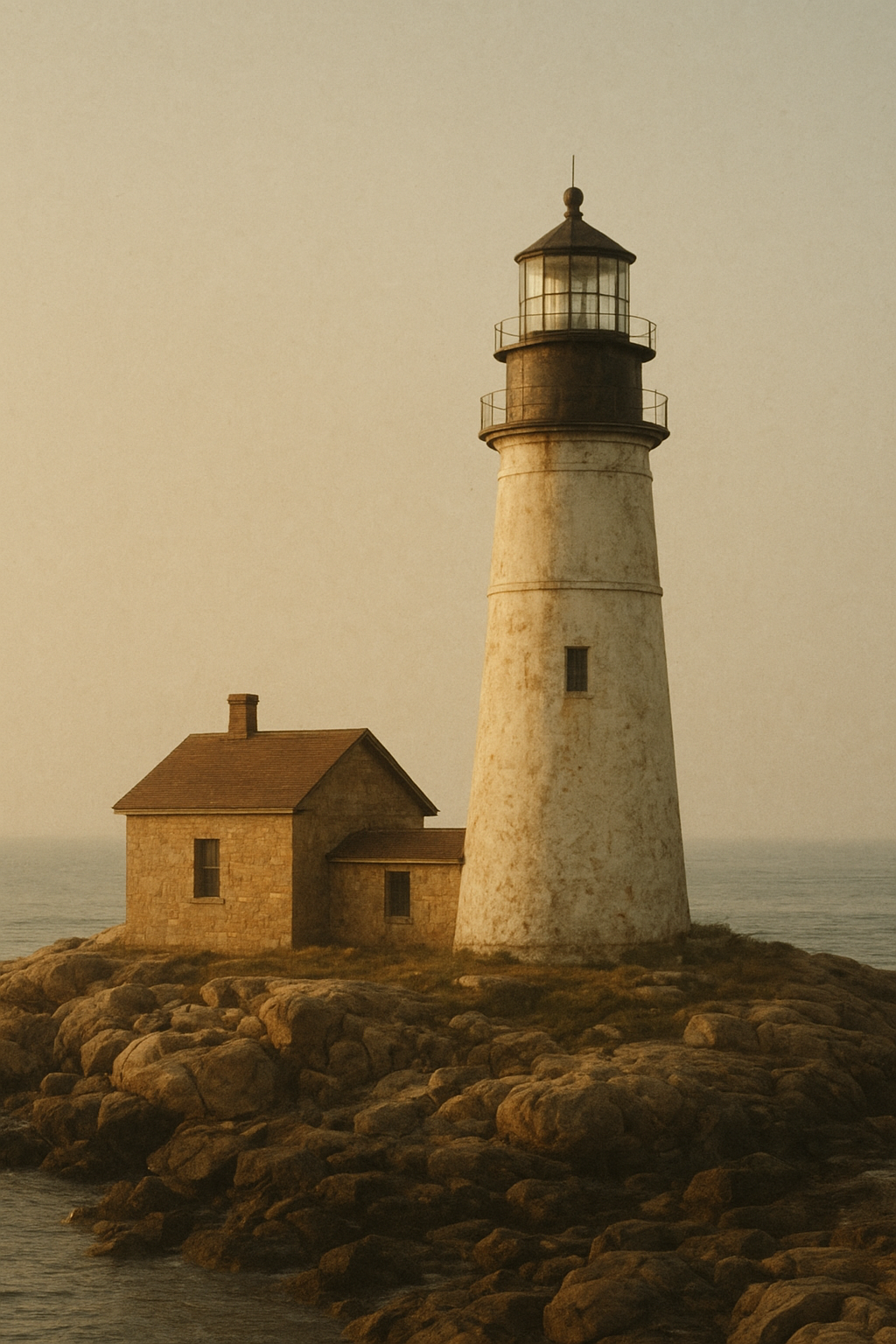
Warm archival photograph of a northern coast lighthouse with weathered signal house and sea haze

About the northern coast lights

Why these towers mattered along the northern coast

For more than a century, lighthouse stations marked dangerous headlands, guided night crossings, and gave mariners fixed points in weather that erased the shoreline. Their beams, bells, and keepers helped convert uncertain water into a readable route.

Today, preserved towers carry that same record of labor and memory, linking navigation history to the communities that maintained each light through storm seasons and shifting trade.

  • Fog signals

    Horns and bells sounding through low-visibility passages.

  • Shipping routes

    Lights spaced to mark approach lines between harbors.

  • Tower eras

    Masonry, steel, and concrete phases of coastal building.

Northern Coast Chronology

A working history of the lighthouse line

Six moments that trace how towers shifted from first construction to long-term preservation, without losing sight of daily labor along the shoreline.

  1. First tower foundations

    From the late eighteenth to early nineteenth century, stone and brick towers were raised at exposed headlands to mark reefs, shoals, and narrow approaches.

  2. Shipping hazards intensify

    As timber, fish, and coal traffic increased, storms and fog exposed dangerous gaps in coverage, prompting additional lights along the northern coast route.

  3. Keeper households take shape

    Logbooks describe round-the-clock lamp work, weather watching, and maintenance, with many stations run as family households tied to nearby fishing communities.

  4. Mechanical optics evolve

    Oil lamps gave way to improved lenses, clockwork rotation, and stronger fuels, increasing range and making each beacon’s flash pattern more legible offshore.

  5. Automation restructures duty

    During the mid-to-late twentieth century, electrification and remote control reduced resident staffing, ending long-standing keeper routines at many towers.

  6. Preservation and public memory

    Local trusts and heritage groups stabilized surviving structures, opening selected sites for research and interpretation while documenting towers lost to erosion and neglect.